Brody’s Attack on the Just Desserts Truck
Of Fates & Fables (The Complete Series)Brody’s Attack on the Just Desserts Truck is the moment when Brody’s campaign of coercion breaks into a public space built around friendship, food, and ordinary campus life. By striking Anna’s celebrated dessert truck, Brody does more than ambush Romy’s allies: he turns a communal gathering into a trap, wounds Justice, and carries him away as the pack’s conflict becomes impossible to contain.
Causes and Background
The attack grows out of a larger struggle over Kash Montgomery’s territory and the kind of werewolf society Brody wants to build. Kash had already explained that Brody was obsessed with producing a pack born rather than bitten, so that he could claim Kash’s lands. That ambition gives the truck assault a political purpose beyond personal revenge. Brody is not merely seeking Romy or provoking Kash; he is testing the defenders of an opposing pack while pursuing the people whose existence threatens his plan.
The immediate setting appears safe because Anna’s business is associated with pleasure and reliability. Anna’s Just Desserts truck is one of the most popular in Reverence, and her desserts are famous for comic names and exceptional quality. Her baking is not a hobby masking incompetence: she is described as a master baker and a businesswoman already successful before college, studying so that the enterprise can expand into a household name. The truck therefore represents Anna’s independence, labor, and public identity. It is also a natural gathering point, which makes its popularity useful to the defenders and dangerous once Brody chooses to exploit it.
After Kash agrees to the group’s plan, Anna announces through social media that Just Desserts will return for a one-night engagement at the edge of campus to christen her new truck, Marie, named after Talia. Kash promises to station pack members throughout the area, turning the celebration into a guarded operation without stripping it of its public appearance. The plan depends on the assumption that Brody will remain hidden rather than risk exposure for a minor prize such as a cookie. That confidence creates the event’s central reversal: the truck is prepared as bait, but the bait also gives Brody a crowded and symbolically valuable target.
The Attack at the Truck
The gathering initially follows the familiar rhythm of Anna, Talia, and Romy working together. After the crowd has been served, the three women clean up without needing to speak in order to coordinate. The atmosphere still belongs to routine and teamwork when a familiar voice comes through the open serving window, announcing that the men are “a little indisposed at the moment.” The phrase reveals that Brody has already disrupted the security plan before anyone sees him. Talia recognizes him immediately and reaches for the weapon hidden in her boot.
Brody’s appearance changes the truck’s function in an instant. The serving window, designed to connect Anna with her customers, becomes an entry point for violence. Romy orders Anna to be protected as Brody shifts and launches himself toward the opening. Before he can pass through, Justice catches him in midair with his powerful arms and throws him against a nearby tree. Justice then tells the women to get Anna into the cab before shifting and charging Brody’s wolf form. The response is organized and protective: Talia moves Anna to safety, while Justice absorbs the first direct attack.
The fight quickly exposes the difference between defense and domination. Brody slips behind Justice and tears into his hind leg until it hangs awkwardly. Justice’s howl of pain drives Romy back toward him, and her attention narrows to rescuing her friend. Talia curses as Romy rushes to the rear of the truck, while a call for help comes through the speakers. The oddly playful response associated with the call cannot soften what follows. The scene’s familiar objects and routines remain in place, but their meanings have changed: the truck is now a fortified position, the cab is shelter, and the serving window is a breach.
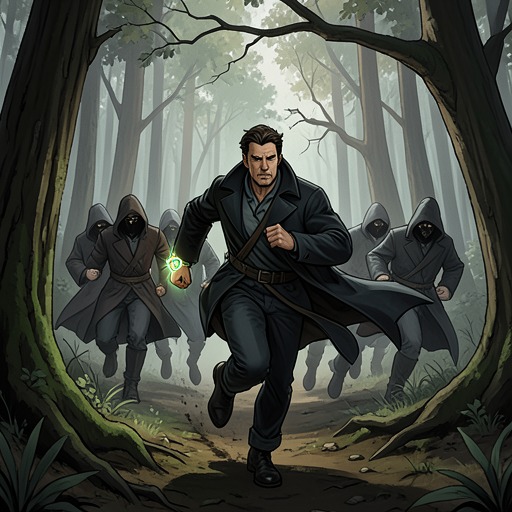
Brody does not stop after injuring Justice. When a distant howl signals that other help is approaching, he decides that the wounded Justice will serve as a consolation prize. He reaches down to seize Justice by the hair while Romy dives for her friend’s leg. Romy uses her power of compulsion and orders Justice to tell Brody what he wants to know, attempting to turn the supernatural mechanism of forced obedience against the attacker. The effort does not save Justice. Brody kicks Romy in the chin, tears Justice from her grasp, and carries him into the night. The last image Romy has of her friend is his shocked blue eyes as he is taken away.
Participants and Stakes
Romy enters the confrontation as both protector and active combatant. Her first instinct is not self-preservation but the command to protect Anna, and her later movement toward Justice shows that the attack creates competing obligations within seconds. She tries physical rescue when Justice is seized, then resorts to compulsion when strength is insufficient. The failure is consequential because it demonstrates that her ability is powerful but not absolute; against Brody’s physical force and strategic purpose, it can delay or redirect violence without guaranteeing control over its outcome.
Anna is the event’s civilian and symbolic center. Her truck has drawn the enormous crowd that makes the operation possible, yet the public success of the business also creates the exposure Brody needs. Her social-media announcement helps establish the gathering and thereby places the truck in the open, while Romy’s command and Talia’s movement into the cab show that the group regards Anna’s safety as an immediate priority. The attack threatens not only her body but the business through which she has built an independent future.
Justice is the principal target once Brody fails to enter the truck. His intervention initially prevents Brody from reaching the women, and his strength allows him to throw the attacker away from the window. That protective role makes his abduction especially significant. Brody’s choice to carry him off is an attempt to remove a defender, gain information, and punish resistance at the same time. Justice is not taken because he is passive; he is taken because he stands between Brody and the people Brody wants to reach.
Talia functions as the group’s armed readiness and immediate tactical support. She recognizes the danger, reaches for the weapon in her boot, helps secure Anna inside the cab, and remains close enough to react as the fight worsens. Her presence links the truck’s ordinary work to the pack’s defensive life. Kash, although not the person physically carried away, remains central to the stakes because Brody’s attack is directed against the territory, authority, and relationships associated with him.
Brody’s Method and the Event’s Reversal
Brody’s violence is consistent with the coercive pattern visible elsewhere in his conduct. He threatens Romy with forced transformation, insists that Kash will not remain alpha long enough to oppose him, and imagines himself ruling the northeast while demanding the respect he believes he deserves. His assault on the truck gives those threats a public and tactical form. The attack is sudden, but it is not random: he selects a location tied to Anna’s popularity, waits until the defenders are occupied, attacks through the open window, injures the strongest immediate protector, and withdraws with a hostage.
The event also recalls the larger testimony against him. Missy Quinn describes beginning a relationship with Brody before understanding that he was a werewolf; after they reached college, his insults became threats when she refused to let him turn her. The rescued women later insist that what happened to them was never their choice and that Brody and his werebros must answer for it. Against that background, Justice’s abduction is part of a broader system of forced control rather than an isolated act of aggression. Brody treats people as instruments of power, whether through transformation, breeding, intimidation, or captivity.
The truck assault therefore changes the value of public safety from assumed protection to open vulnerability. The group had prepared guards and expected Brody to avoid the risk of appearing. Instead, he converts their confidence into an advantage. The result is not simply that a defense fails; the group learns that Brody can reach them in a place crowded with witnesses, can injure a pack member in front of them, and can leave carrying someone they were unable to save. The attack establishes the urgency of the war that follows.
Consequences and Immediate Aftermath
Justice’s abduction transforms the failed defense into a crisis of command. The attack does not end with Brody’s escape; it leaves Romy with the knowledge that her compulsion could not hold him, that physical bravery could not prevent the removal of a friend, and that every apparently ordinary meeting may become an assault. The group’s protective language also acquires sharper meaning. Kash had insisted that danger required mutual caution, and Romy had answered that the obligation went both ways. At the truck, that principle becomes painfully literal: everyone is responsible for protecting everyone else, yet no one can guarantee the result.
The event also intensifies the question of when violence is permissible. Earlier, Romy, Kash, and Talia had confronted the possibility that Conner’s transformation would add another servant to Brody’s side. Kash judged that Conner would become more dangerous if changed, while Talia rejected delay and killed him by driving her pendant into his neck. That precedent shadows the truck attack. The defenders are not operating under stable legal protection; they repeatedly face emergencies in which waiting for authorization may allow Brody to gain another weapon or victim. The attack makes that exceptional condition visible without making it uncomplicated: Justice is rescued neither by ordinary procedure nor by the group’s initial defensive plan, and the emotional cost of failing to save him immediately becomes part of the pack’s later resolve.
From Abduction to Collective Resistance
The council’s response confirms how far the crisis has moved beyond a private dispute. Kash reports that the council is doing what it can, but Romy calls its members politicians who hope the danger will persist long enough for the packs to resolve it themselves while the governing body keeps its hands clean. Her speech turns Justice’s disappearance into a public argument about responsibility. She declares that the fight belongs to them and that Brody will not simply be allowed to take what is not his. The pack answers with cheers, and Doyle addresses her as boss, marking a reversal in her status from outsider to participant in collective leadership.
That shift matters because Brody’s attack has already revealed the limits of protection arranged from above. The one-night opening at the edge of campus was approved and guarded, yet the decisive defense came from individuals acting within seconds: Romy warning the others, Talia moving Anna, and Justice intercepting Brody. Once Justice is taken, the same community must organize around its own authority. Romy’s later willingness to confront the council and rally the pack shows that the truck is not merely a site of defeat. It is the point at which defensive fear becomes a declared war of resistance.
Resolution in the Final Conflict
The consequences of Justice’s capture continue into the eventual confrontation with Brody. Romy invokes Justice while forcing Brody to surrender his knife, then cuts through Brody’s Delta tattoo. The wound releases a murky green substance identified as draining magic, weakening the supernatural hold Brody has over the wolves behind him. The action reverses the logic of the truck assault: Brody had used strength, hierarchy, and coercion to remove Justice from Romy’s grasp; Romy now uses compulsion and the knife to attack the magical structure sustaining his authority.
The final reversal is direct and personal. After Birdie strikes Regina with a magical bolt, Kash seizes Brody by the exposed throat. Romy takes the knife Brody dropped, helps restrain him, and drives the blade into the already opened wound in his throat. The killing is not presented as detached legal punishment. It is the culmination of repeated failures of institutional protection, the rescue of women from his breeding operation, the threat to Kash’s territory, and the abduction of Justice at the truck. Justice’s name gives Romy’s act an immediate moral charge, while the draining tattoo makes the blow part of a broader effort to free the wolves from Brody’s compulsion.
Narrative Significance
Brody’s Attack on the Just Desserts Truck is a threshold event because it collapses the boundary between the women’s public lives and the supernatural war surrounding them. Anna’s dessert business, with its crowded opening and newly christened truck, embodies craft, friendship, entrepreneurship, and the possibility of a future organized around chosen work. Brody enters through that bright public image and converts it into a scene of injury and removal. The contrast gives the attack its force: the danger is not confined to hidden cells, abandoned clinics, or secret territories but can arrive through the same window that serves food to a crowd.
The event also clarifies the opposing social orders at stake. Anna’s truck depends on voluntary participation, shared labor, and a public relationship with customers. Brody’s power depends on compelled obedience, forced transformation, reproductive control, and the seizure of territory. Justice’s intervention represents the first order in bodily form; his abduction demonstrates the violence of the second. Romy’s later resistance, from challenging the council to cutting away Brody’s magical tattoo and helping kill him, develops the event’s central movement from vulnerability toward self-authorized defense. The truck attack is therefore both a tactical loss and a narrative catalyst: it removes Justice, exposes the inadequacy of passive protection, and helps turn a threatened community into an organized force capable of ending Brody’s rule.